Resurrection at Sorrow Hill
Resurrection at Sorrow Hill · Toco, Trinidad and Tobago · 202013 frames · No. 18
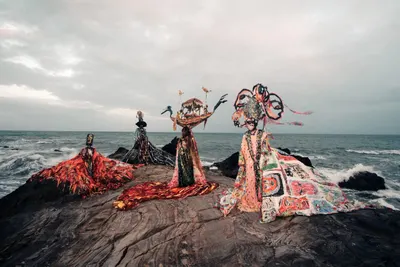
No. 18
Toco, Trinidad and Tobago · 2020 · 13 plates
Each inmate channels a figure from history, blurring the border between madness and prophecy.
For Carnival 2020, Alan Vaughan’s Moko Somõkõw returned to the work of Guyanese novelist Wilson Harris, following their 2019 adaptation of Palace of the Peacock, with Resurrection at Sorrow Hill, Asylum for the Greats. The novel is set at the confluence of three rivers in the Guyanese interior, where the inhabitants of a former gaol and mental asylum carry alter-egos forged from the trauma of conquest and colonialism.
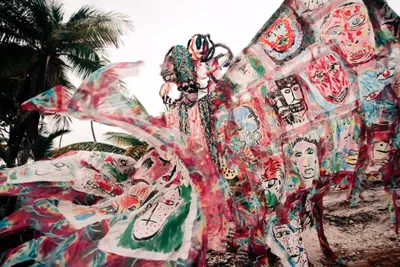
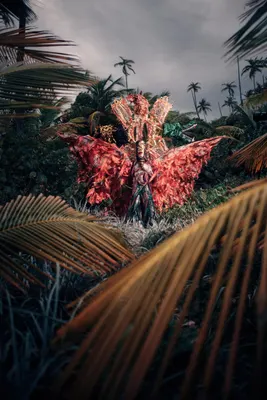
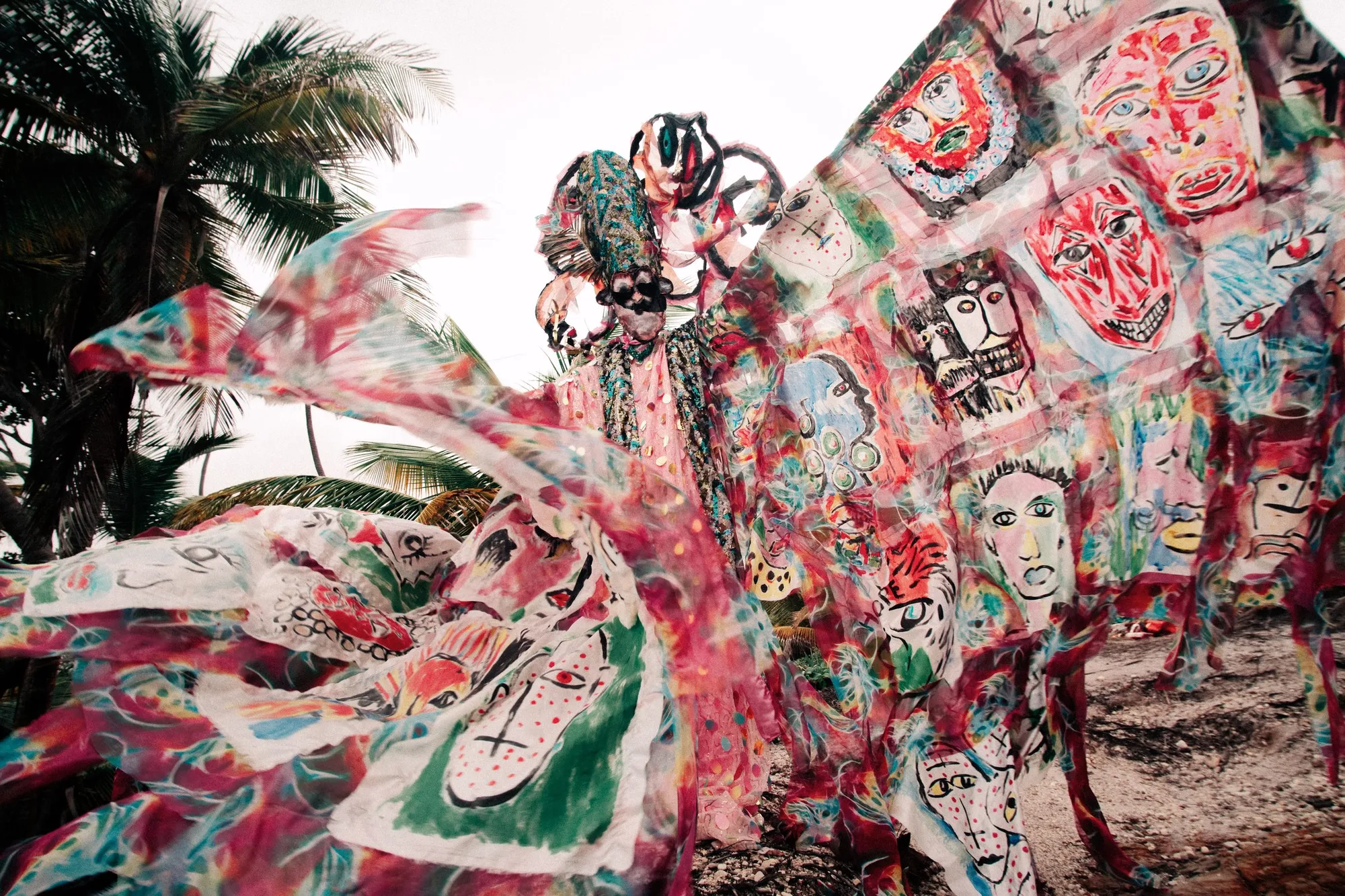 Hope, Archbishop of the South American Cathedral of the Rainforests · Resurrection at Sorrow Hill · 2020 · Pl. 01/13 · p. 299
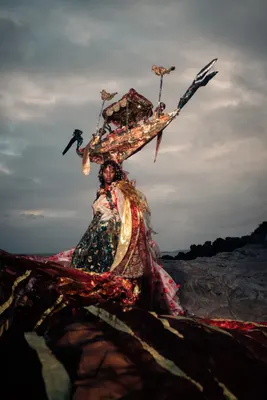
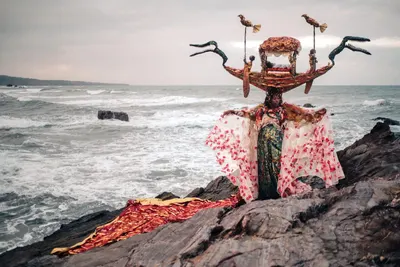
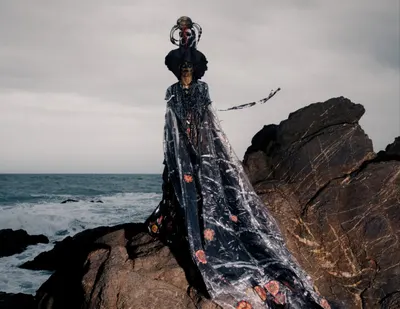
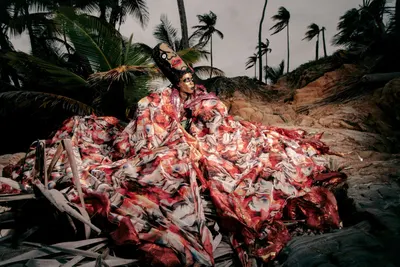
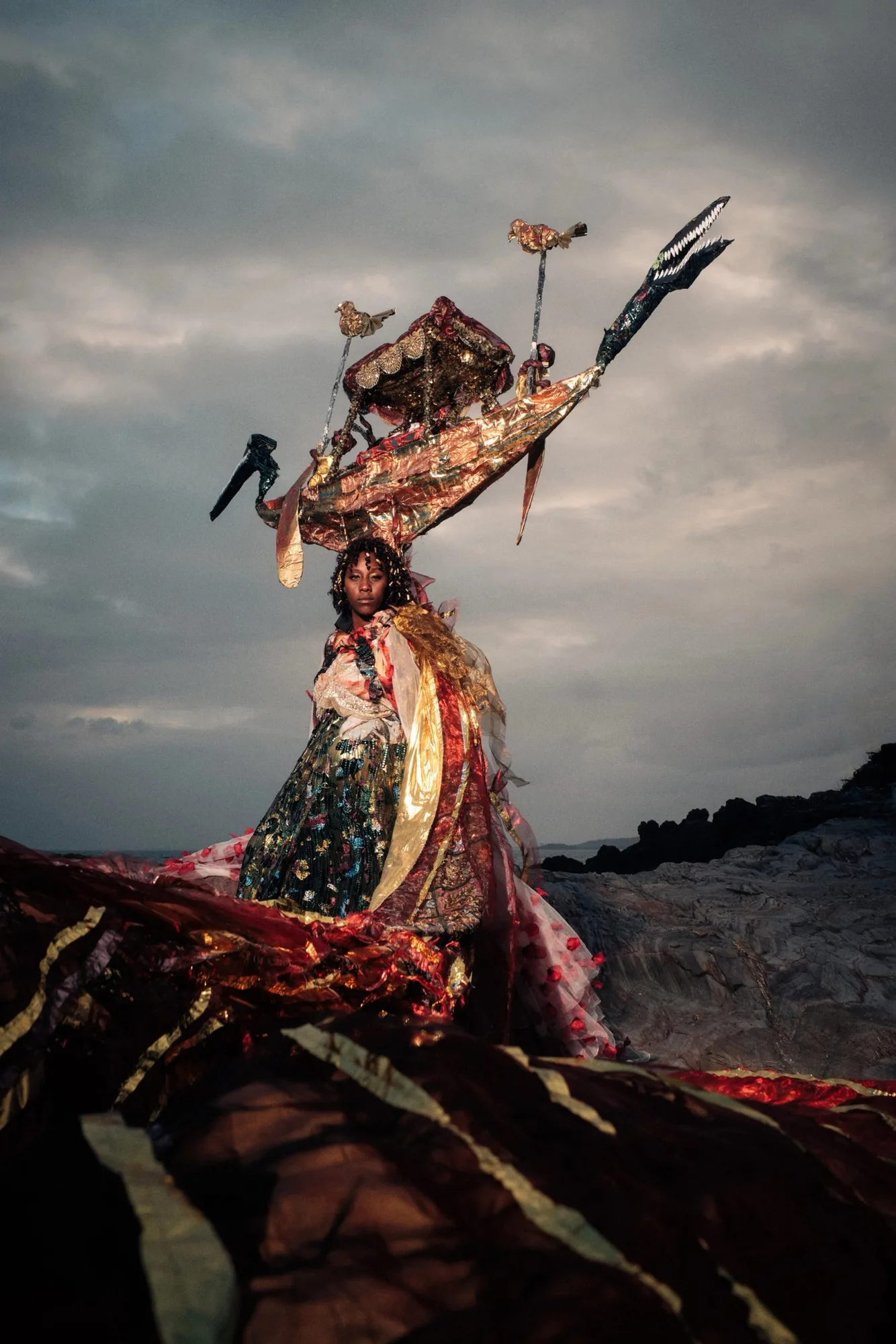 Ruth, Queen of the Oceans of Humanity · Resurrection at Sorrow Hill · 2020 · Pl. 02/13 · p. 300
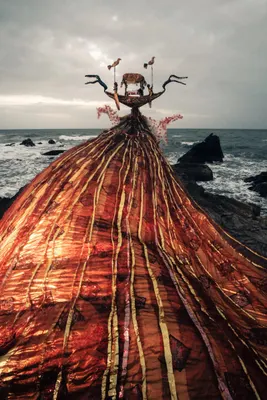
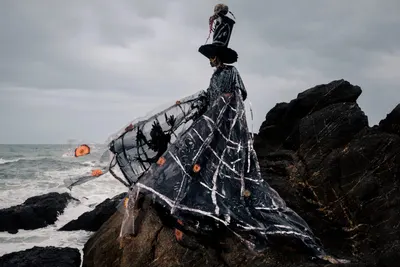
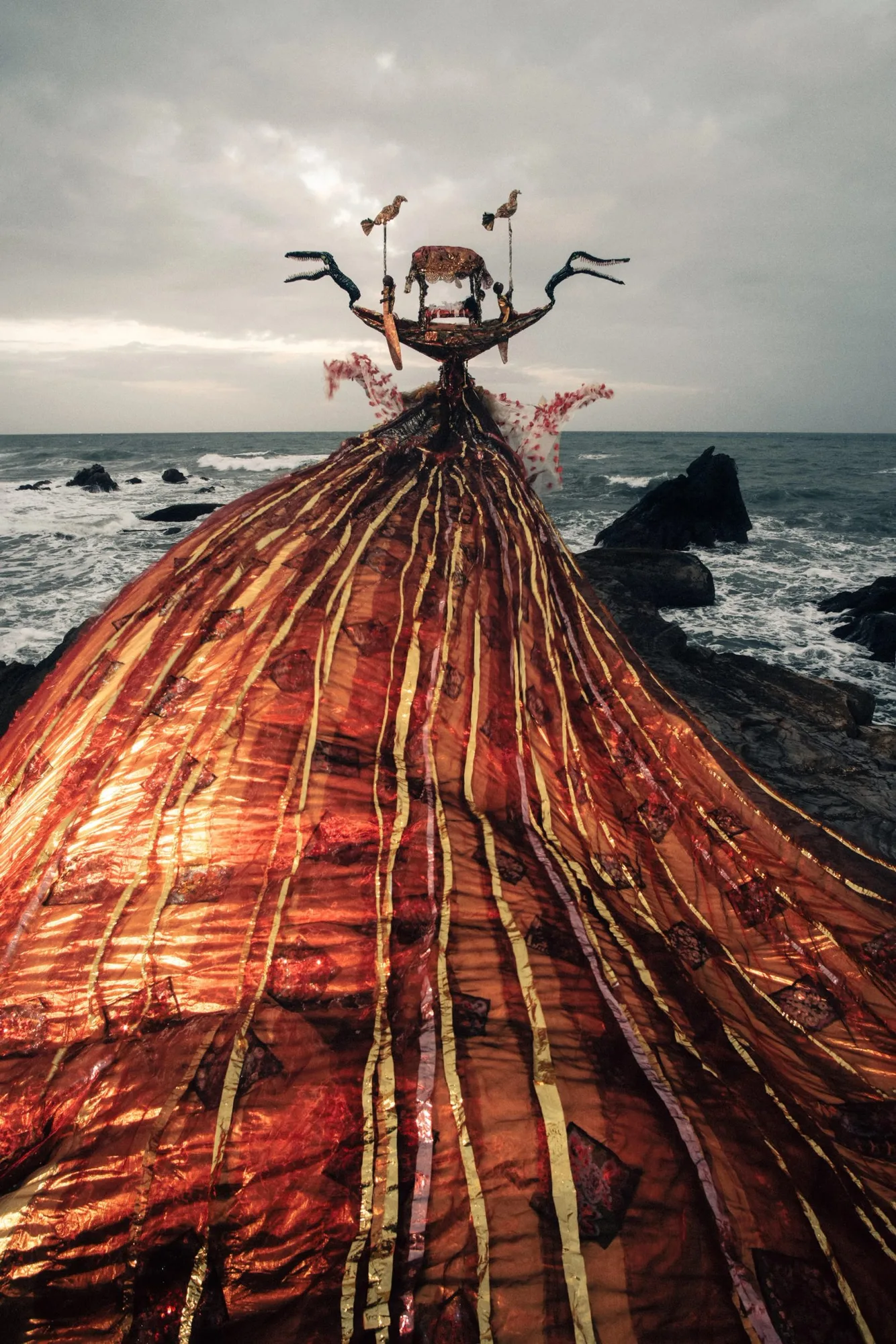 Ruth, Queen of the Oceans of Humanity · Resurrection at Sorrow Hill · 2020 · Pl. 03/13 · p. 301
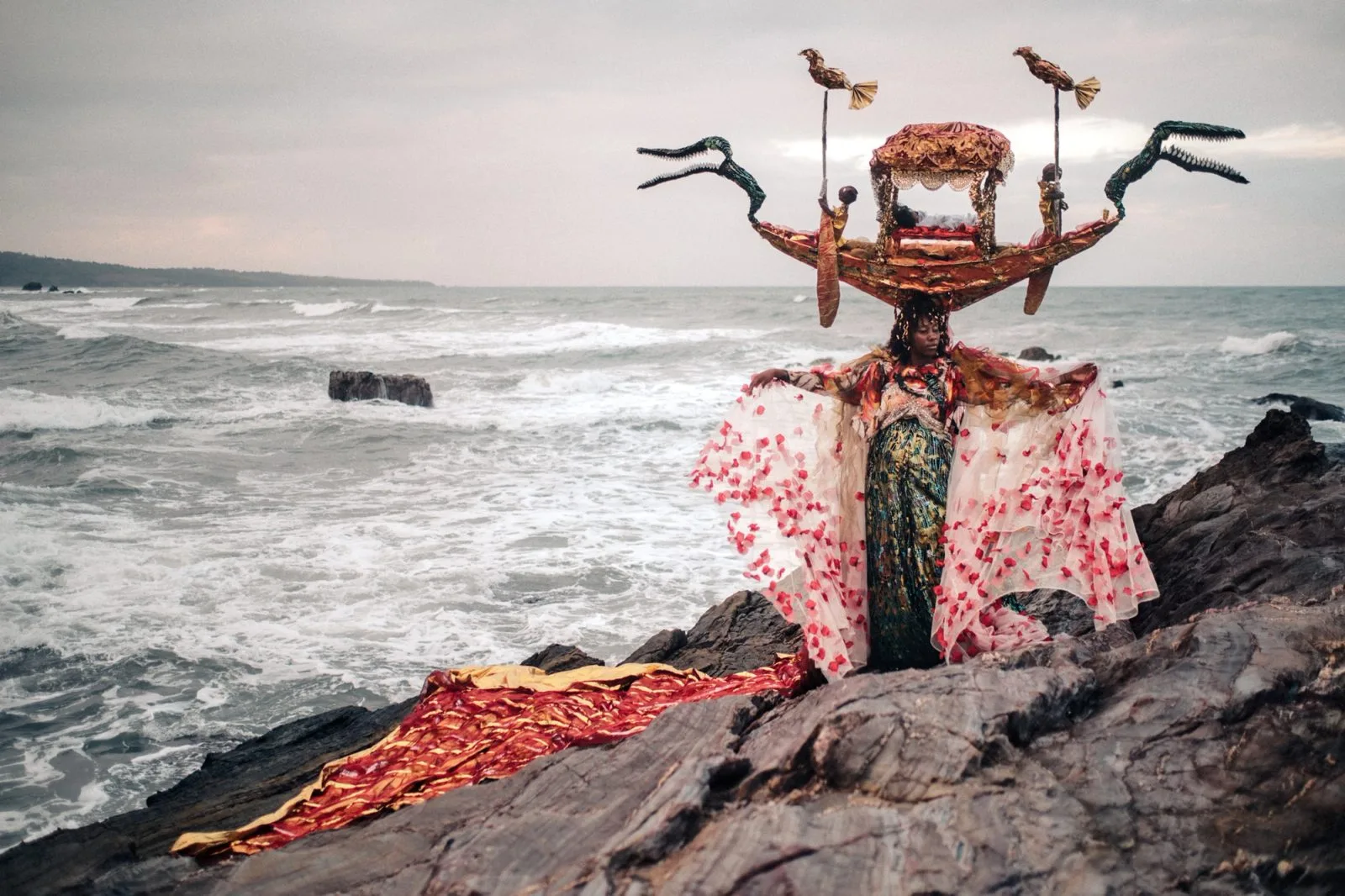 Ruth, Queen of the Oceans of Humanity · Resurrection at Sorrow Hill · 2020 · Pl. 04/13 · p. 302
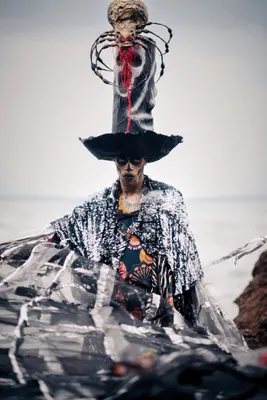
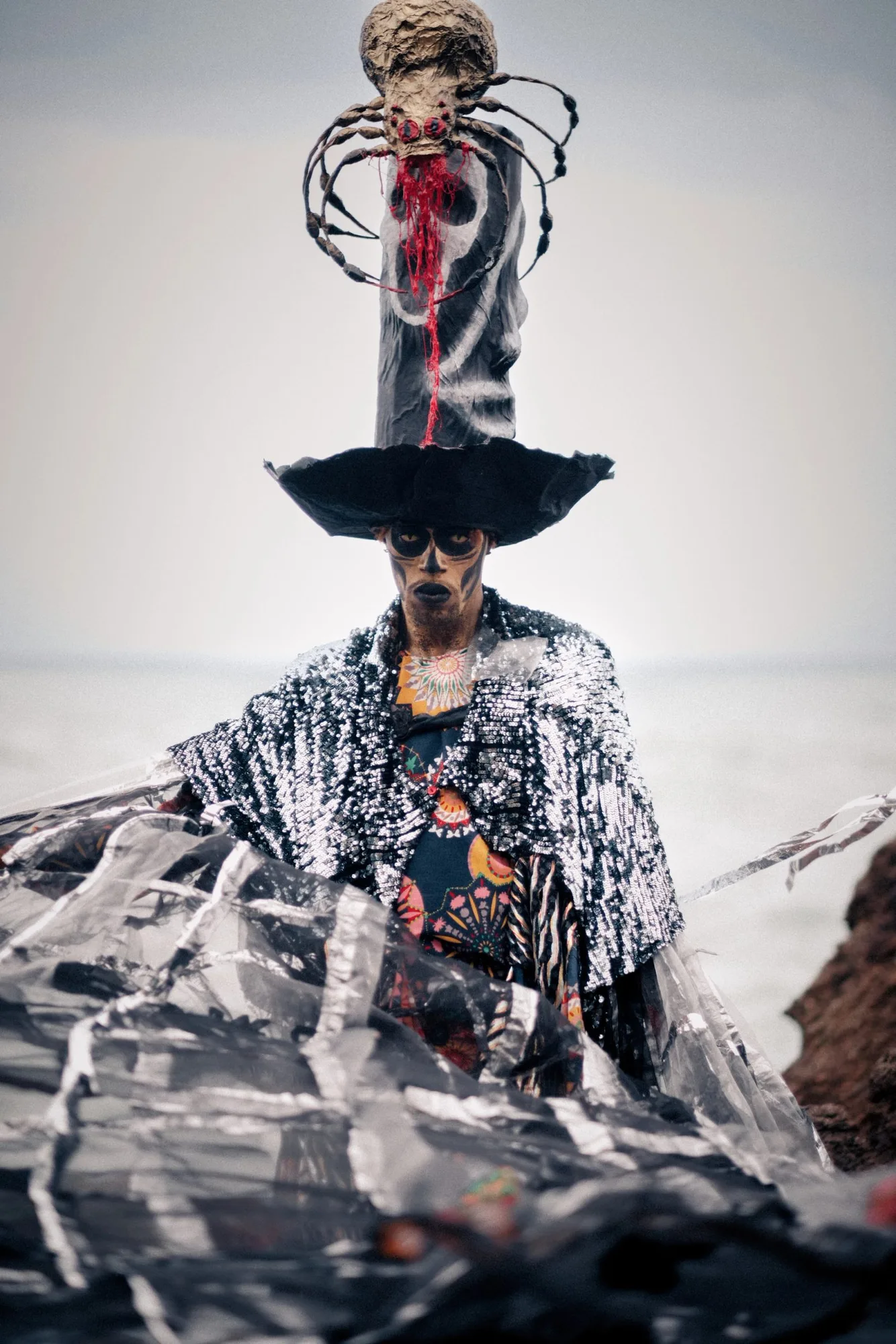 Christopher D’eath, Winder of the Spider-Clock · Resurrection at Sorrow Hill · 2020 · Pl. 05/13 · p. 303
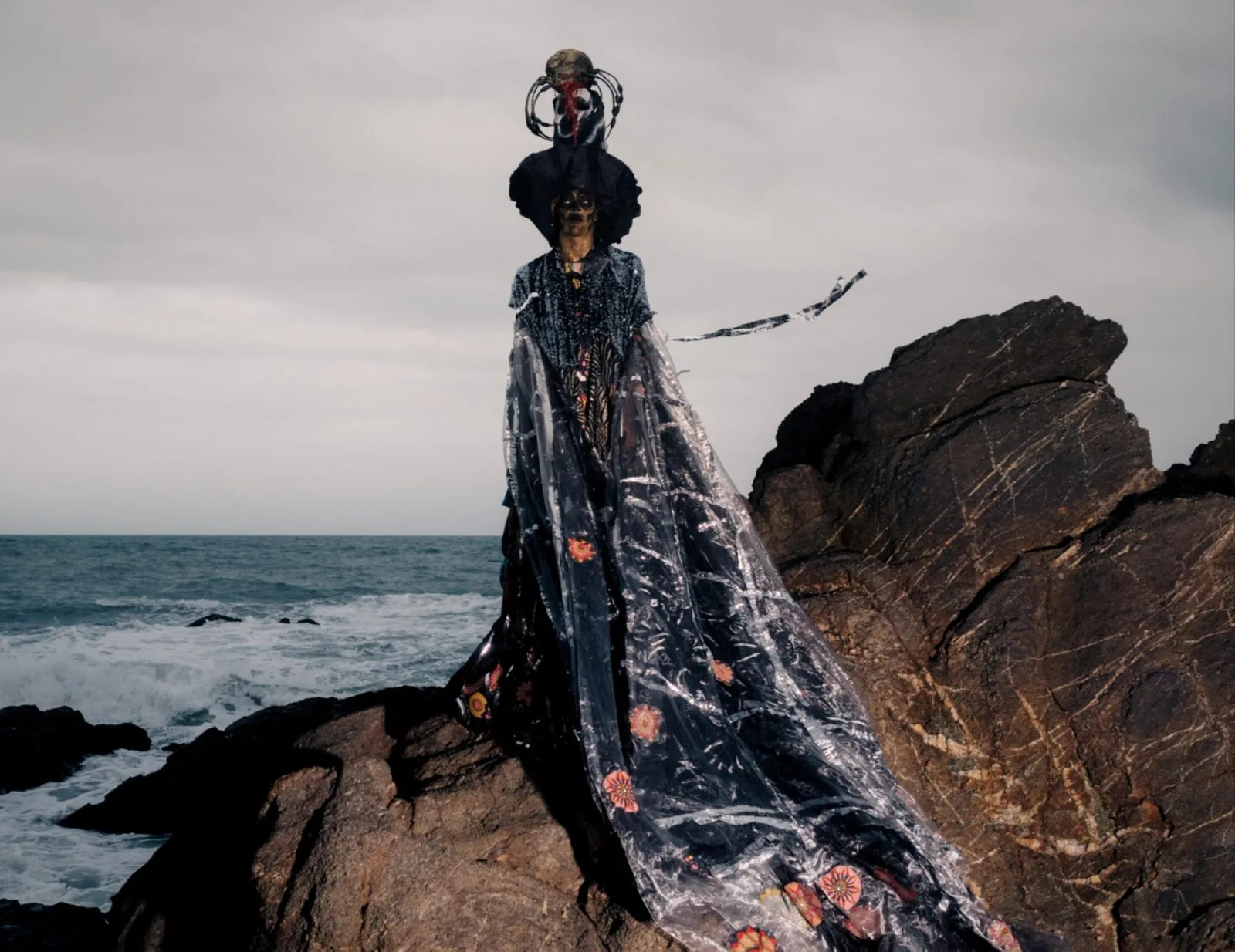 Christopher D’eath, Winder of the Spider-Clock · Resurrection at Sorrow Hill · 2020 · Pl. 06/13 · p. 304
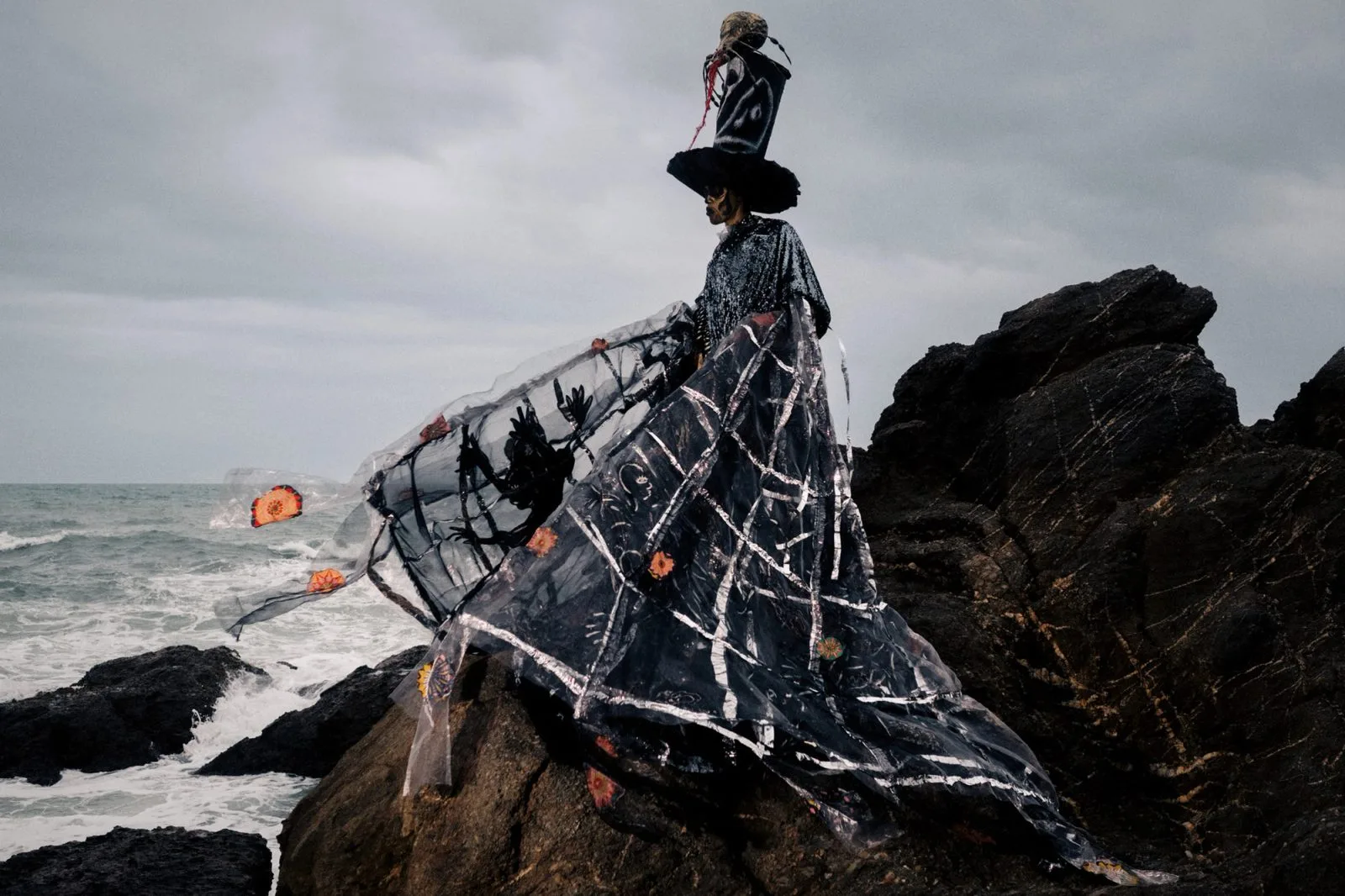 Christopher D’eath, Winder of the Spider-Clock · Resurrection at Sorrow Hill · 2020 · Pl. 07/13 · p. 305
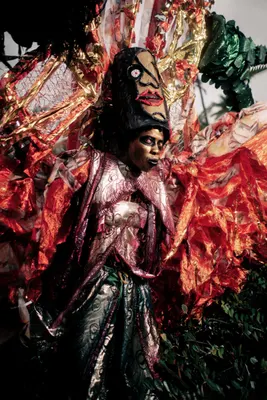
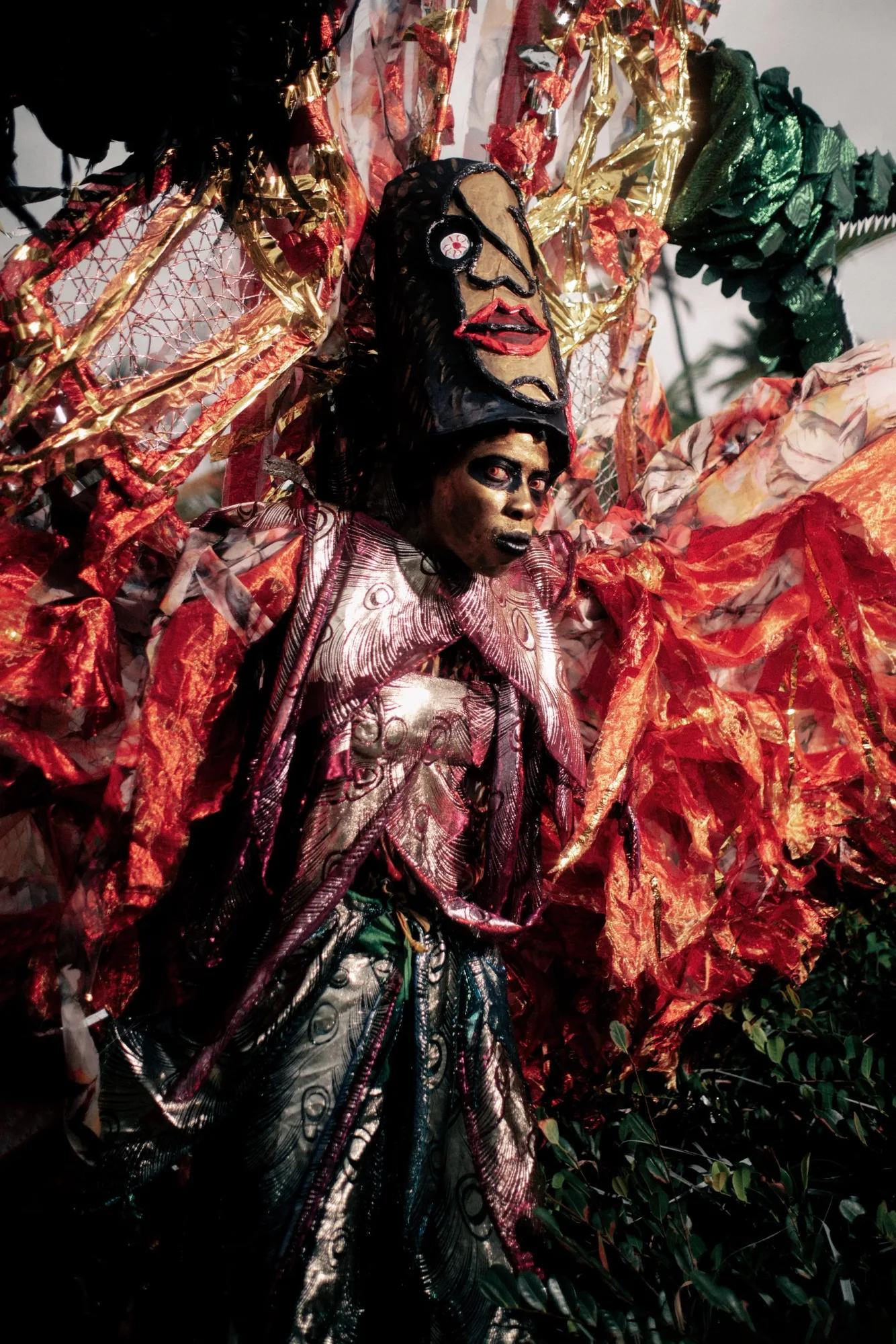 Montezuma, Deposed Emperor of the Aztecs · Resurrection at Sorrow Hill · 2020 · Pl. 08/13 · p. 306
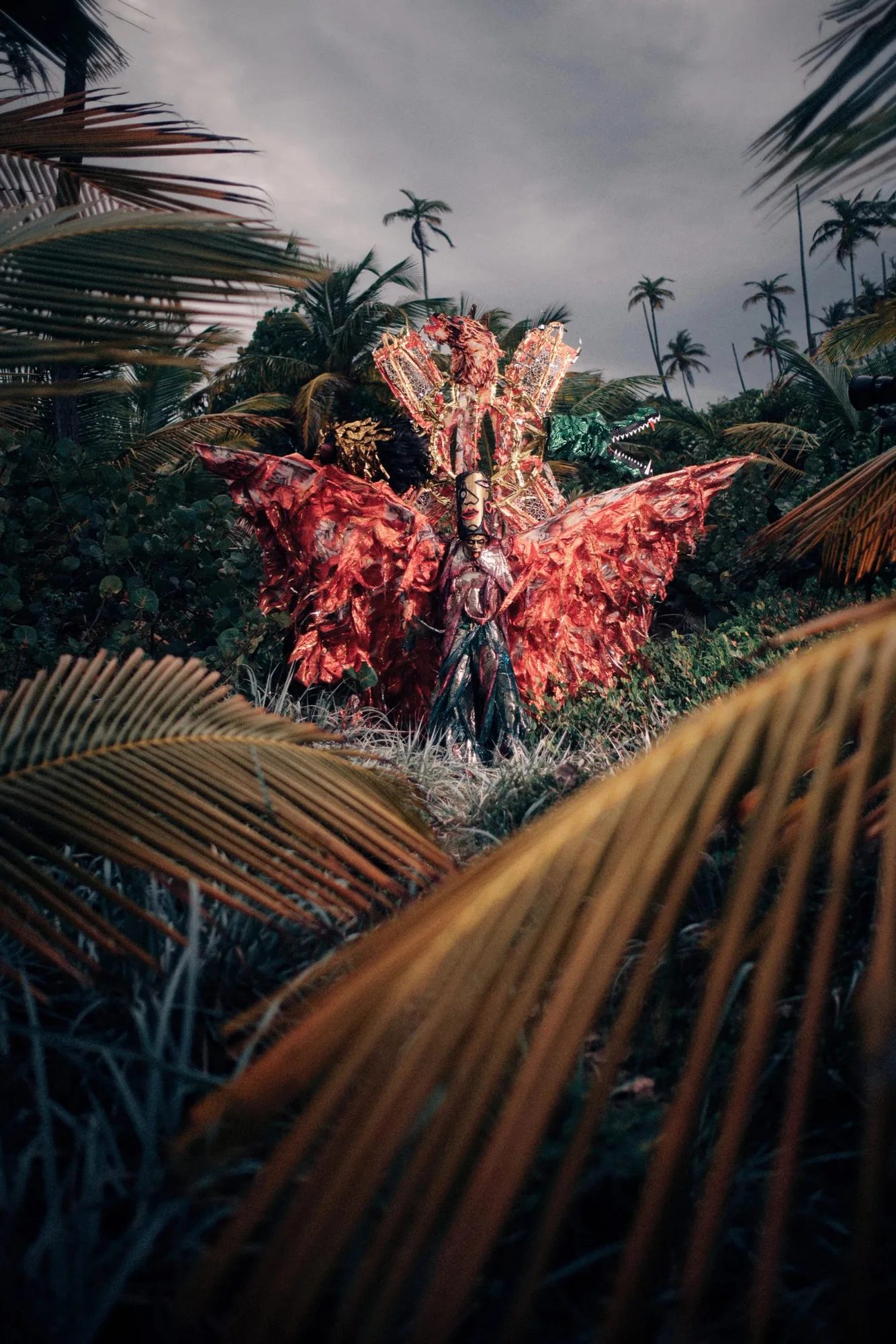 Montezuma, Deposed Emperor of the Aztecs · Resurrection at Sorrow Hill · 2020 · Pl. 09/13 · p. 307
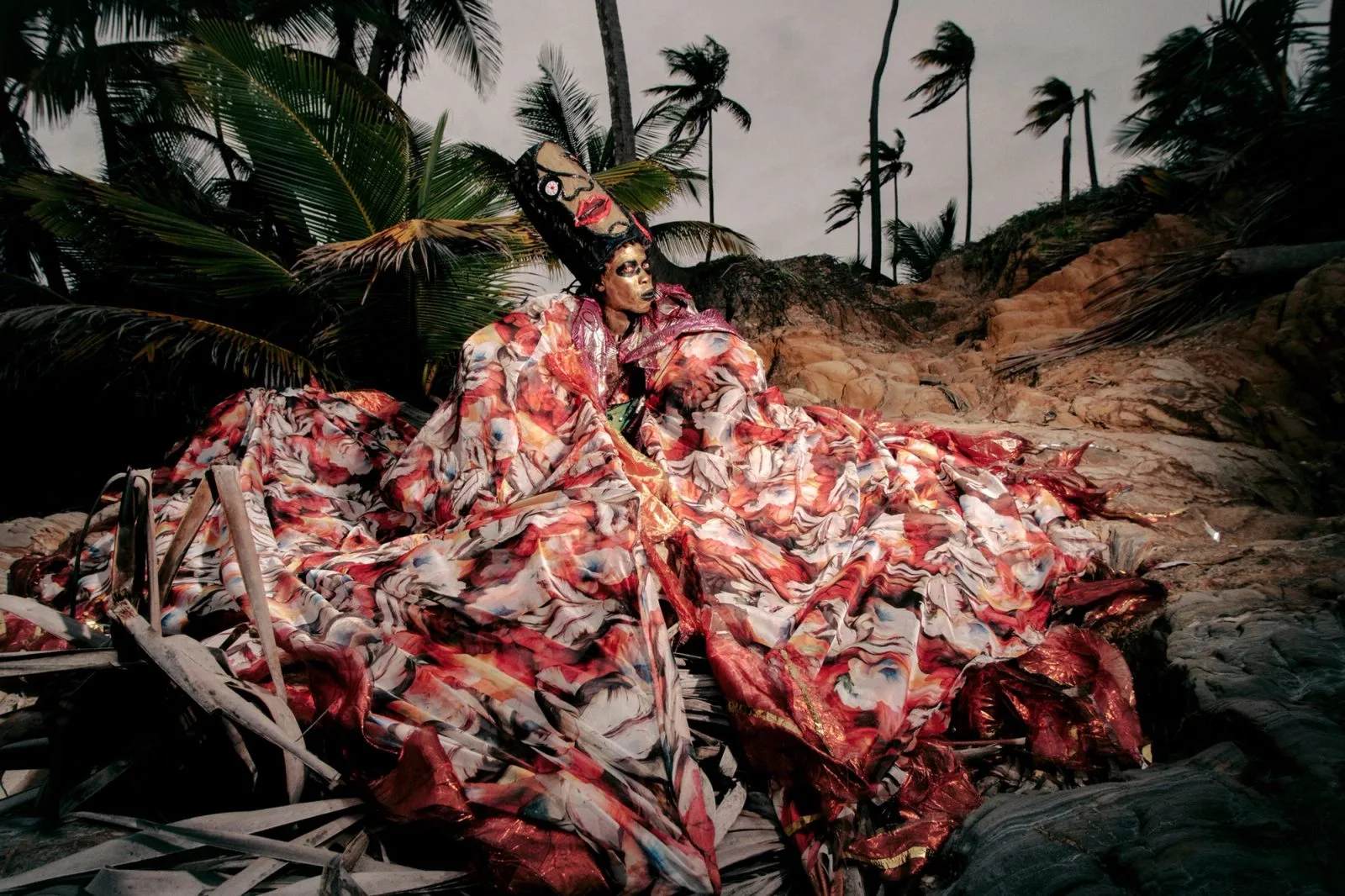 Montezuma, Deposed Emperor of the Aztecs · Resurrection at Sorrow Hill · 2020 · Pl. 10/13 · p. 308
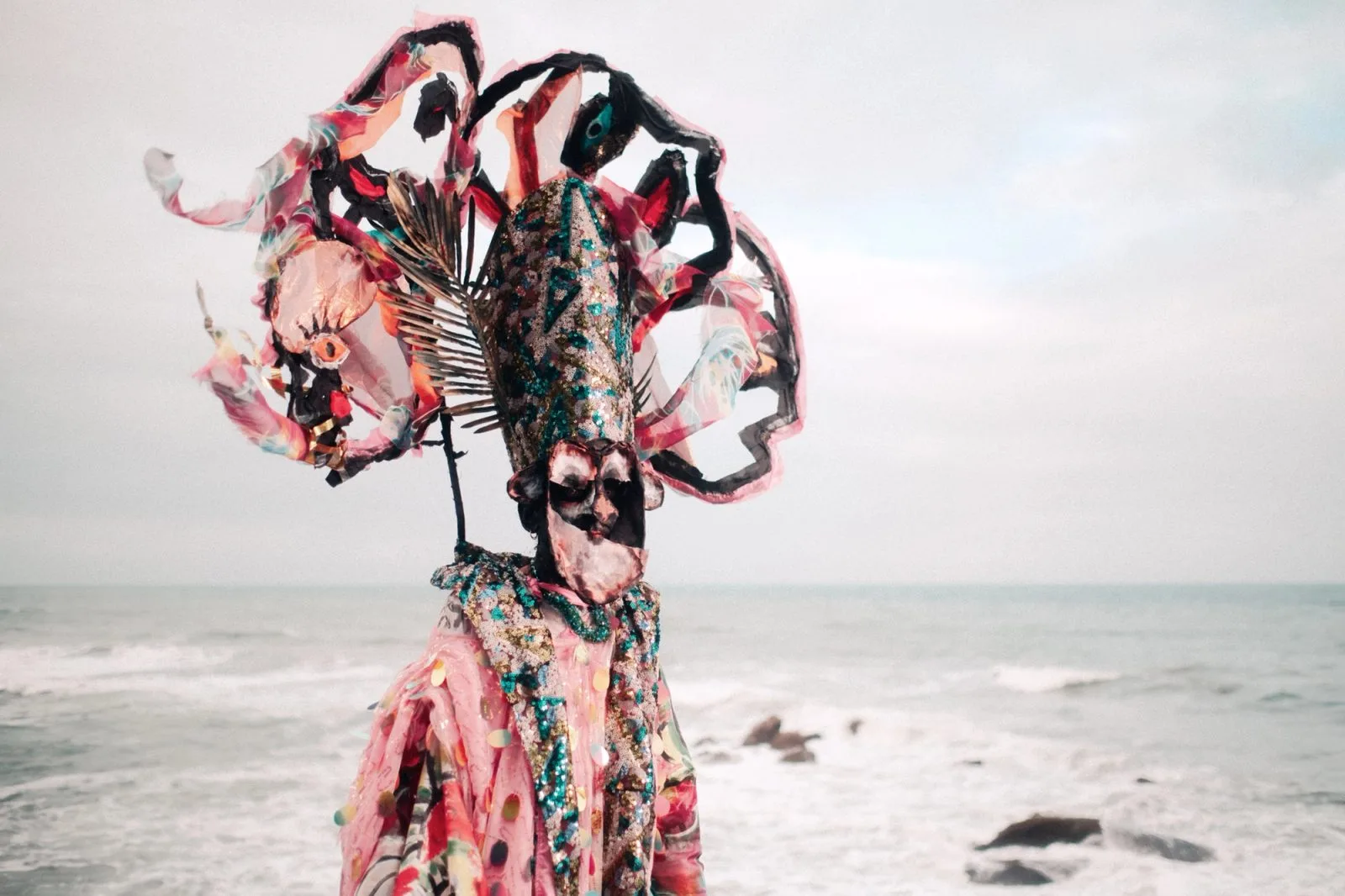 Hope, Archbishop of the South American Cathedral of the Rainforests · Resurrection at Sorrow Hill · 2020 · Pl. 11/13 · p. 309
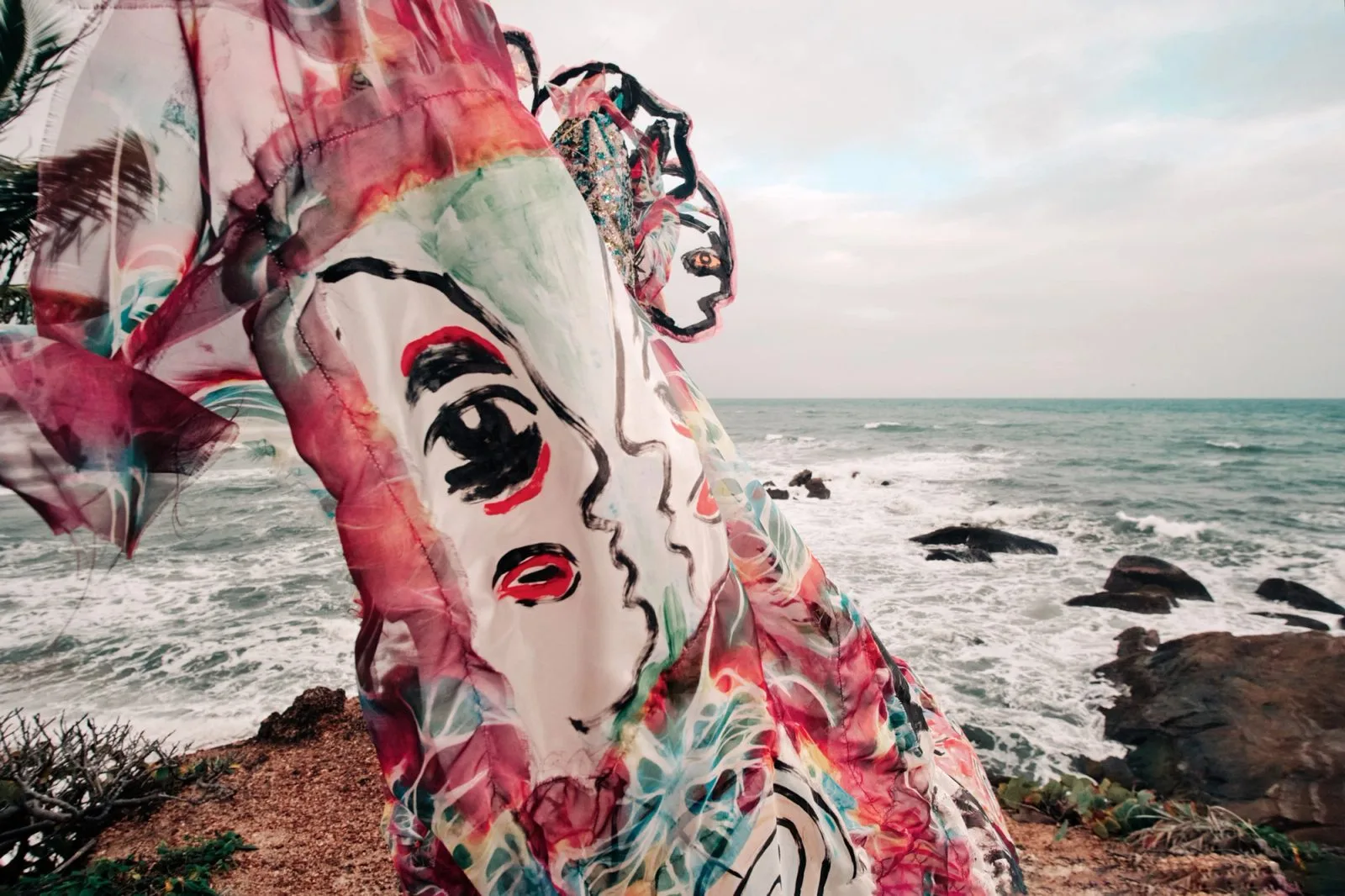 Hope, Archbishop of the South American Cathedral of the Rainforests · Resurrection at Sorrow Hill · 2020 · Pl. 12/13 · p. 310
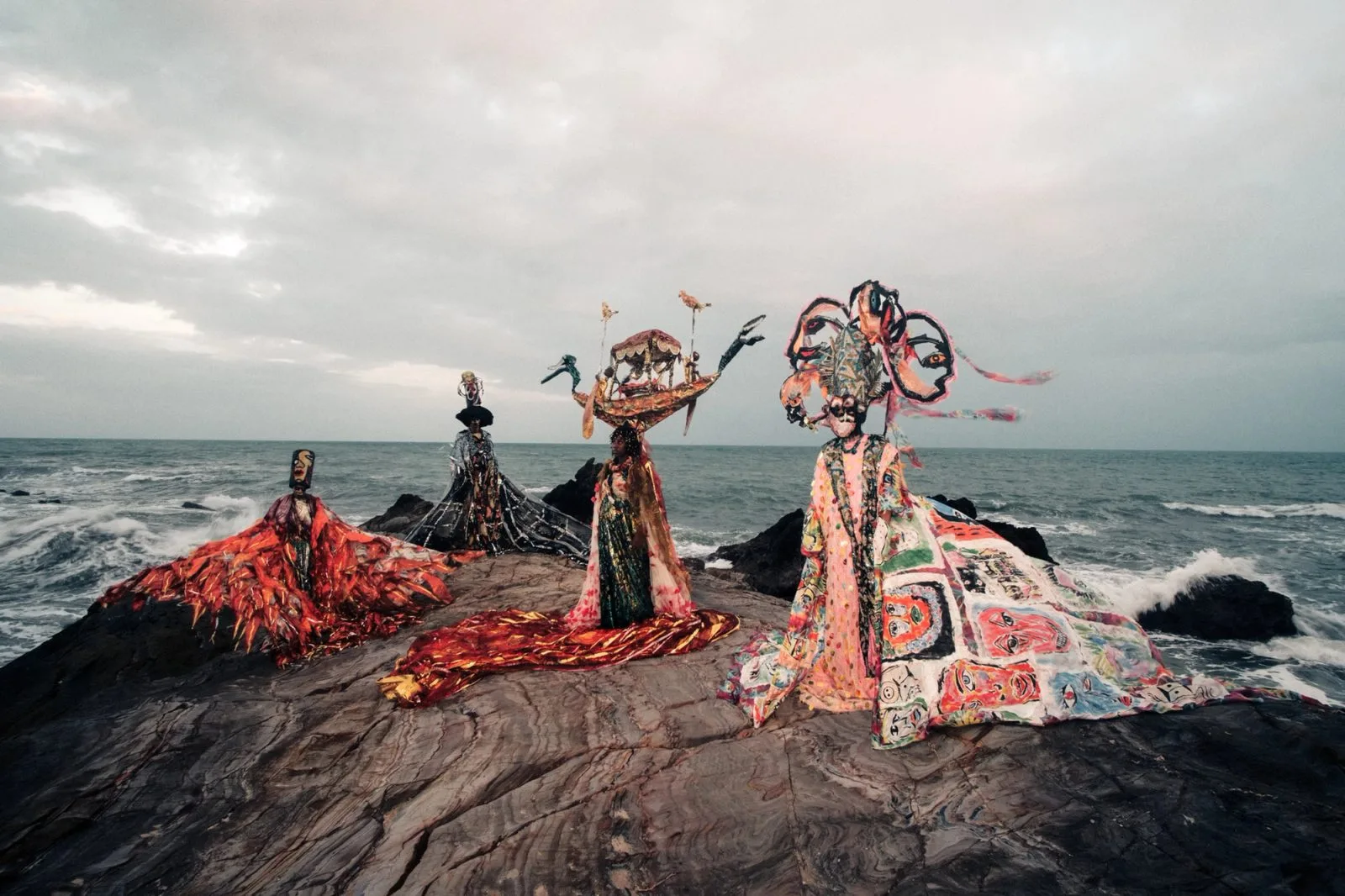 The Asylum for the Greats · Resurrection at Sorrow Hill · 2020 · Pl. 13/13 · p. 311
Each inmate channels a figure from history, blurring the border between madness and prophecy.
For Carnival 2020, Alan Vaughan’s Moko Somõkõw returned to the work of Guyanese novelist Wilson Harris, following their 2019 adaptation of Palace of the Peacock, with Resurrection at Sorrow Hill, Asylum for the Greats. The novel is set at the confluence of three rivers in the Guyanese interior, where the inhabitants of a former gaol and mental asylum carry alter-egos forged from the trauma of conquest and colonialism. Hope, Dr Daemon, Montezuma, Leonardo, Marx: each inmate channels a figure from history, blurring the border between madness and prophecy, between the personal wound and the civilisational one.
Vaughan translated this into mas, drawing on the band’s Afro-Atlantic spiritual vocabulary — Orisha and Vodun — alongside the visual arts and literature: costumes that carry the novel’s inhabitants on stilts through the streets of Port of Spain, each Moko Jumbie a character whose identity has fractured and reformed beneath the pressure of colonial history. The presentation was staged at the last full Trinidad Carnival before the pandemic.
These photographs were devised and made as an integral part of Moko Somõkõw’s creative process — not documentation after the fact, but work produced alongside the band as the costumes and characters came into being. The images hold what the novel asks of its readers: to sit inside the asylum and see what the inmates see — not delusion, but a deeper order of truth.
THE RESURRECTION OF HUMANITY
Dressed in glittering garments, a former slave transforms into Cleopatra, carrying her African child — the son of an 18th-century Governor of Essequibo — on a funeral-crocodile-barge. He is Akhenaton, pharaoh and sun-god. She is the eternal resurrection of humanity through birth and death.
She is Leonardo’s Madonna of the Rocks; she is Yemanja — a resurrection of incredible beauty from the grave of rivers and seas where her antecedents perished on the crossings between old worlds and new. She bears her child aloft in a river of gold at the confluence of cultures and civilisations, a mother’s will for freedom and life for her children.
CAUGHT IN HIS OWN WEB
Mankind is caught in the web of his own avaricious humanity — but, reminiscent of a plea to the Vodun Loa Baron Samedi, he may yet be saved from his own destruction.
Christopher D’eath embodies man’s power to destroy the world — plundering resources, raising armies and machines for conquest. But his redeeming aspect, Spirit-Conscience or Shadow-Constellation, gives many faces to his character to counter his destructive ambition. His cry is the agonising scream of Christ in Everyman.
MEMORY OF LOST CIVILISATIONS
Monty, a Venezuelan, killed his friend in a brawl; in his schizophrenic anguish he believes he is Montezuma. Rising as a glittering apparition, he is vengeful for the duplicitous murder of his civilisation in the wake of the Spanish conquest.
Montezuma symbolises the enduring memory of lost civilisations, carried in the DNA of conquered peoples. His Aztec-calendar headpiece hints at different time-frames, spiritual and cyclical; his wings shimmer in the forest sunlight.
A COMPOSITION OF IMPOSSIBLE MASKS
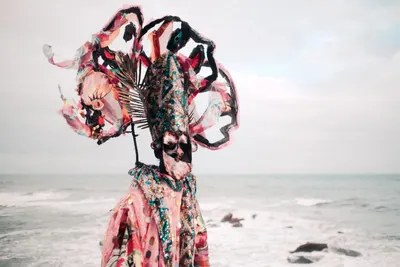
He is a Roman, an African, an Athenian, an Indian — a composition of impossible masks worn in the dark night of the soul, and in the cathedral of space. He wears an archbishop’s mitre and a headpiece carrying the profiles of mythological figures.
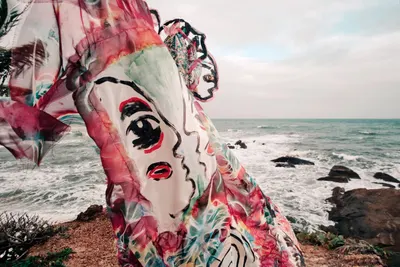
Hope writes the book of the Asylum for the Greats at Sorrow Hill — a maker of legends drawn from the parables of conquest, breaking into many profiles of myth within a single reality. The inmates know him as “the gods’ trickster of love and tenderness.” He wears a gown of raindrops, its sleeves hung with the masks of people and legends.
TURN THE WORLD ON ITS HEAD
Moko Somõkõw
Moko Somõkõw portray the characters of Wilson Harris’s Resurrection at Sorrow Hill, their 2020 Carnival presentation. Photographed on the wild Atlantic coast of Trinidad, the ethereal, statuesque figures of the Asylum for the Greats — “a host of dream characters that seem to turn the world on its head” — meet the elements: wind, sea and rock.