Quantum Memory
The Living, the Lost, and the Ghosts We Carry.
Each frame is a sealed box. A photograph gives you the ache in a single blow. A film lets you live inside it.
Quantum Memory is a framework for understanding why images hold ghosts, and what that means for every person who has ever held a camera.
The Sealed Box
Each frame is a sealed box. Until you open it, the people inside exist in two states simultaneously, alive and not alive, present and absent, yours and gone.
Schrödinger proposed his thought experiment in 1935: a system can exist in multiple states at once until observation forces it into one. The cat is both alive and dead until you open the box. But anyone who has ever stumbled across a forgotten video on their phone already knows what superposition feels like. You pull out a face. And for a moment that face is alive, laughing, present, warm, even though you know, in the world outside the frame, that person is gone.
That contradiction is not a problem to be solved. It is the emotional centre of every image ever made of someone we loved.
I came to this understanding through editing a short film shot in 2022. The people in that film and I had since drifted, clashed, changed. Some of those relationships ended quietly. No funerals. No formal goodbyes. Just the slow withdrawal of presence.
But on screen, we were still laughing. Still collaborating. Still friends. The footage held a version of reality that no longer existed anywhere except inside that file. And watching it, I felt something I couldn’t name at first, a grief that wasn’t about death, but about the death of a version of us.
A photograph gives you the ache in a single blow. A film lets you live inside the ache.
This is where quantum memory begins. Not with cameras or the physics of light, but with a devastating observation: images hold ghosts. The dead and the absent alike. Still and moving. Silent and speaking. And every time we open the box, we bring them back to life for exactly long enough to feel the loss all over again.
We Are Distributed Across Each Other
We walk around carrying pieces of other people inside us. And they carry pieces of us. Not metaphorically. In a real, felt, material way.
There are memories you cannot access on your own. They live dormant somewhere in you until a specific person, the one who was there, says “remember when…” and suddenly the scene floods back. Vivid. Specific. Alive. That memory did not live in you alone. It lived in the space between you.
Time is not a clock. It is the medium through which love builds. You cannot shortcut it. You cannot manufacture it. Two people who have spent fifteen years growing together hold pieces of each other that two people who met last month simply cannot.
When a group of people who shared an experience come together and begin reconstructing it, the memory gets stronger. More real the more people actively hold it.
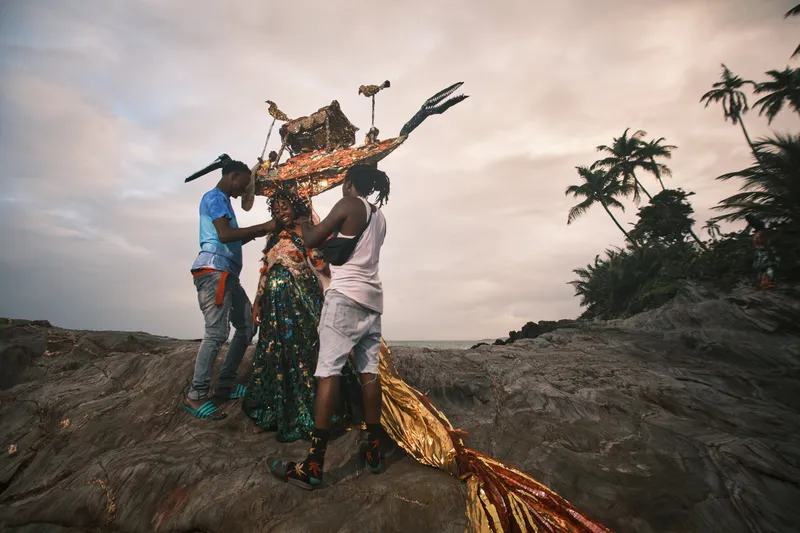
Calypso does this. The same story told a thousand ways. Each telling slightly different, but the core pattern preserved. Steelpan does this. The melody maintained while the arrangement evolves. Carnival does this. Characters recurring year after year, never identical, always recognisable. These are not quaint traditions. They are sophisticated memory technologies, collective systems that keep experience alive through repetition that evolves without losing the core.
The memories live between us. And when we come together, we restore what no individual can hold alone.
When Someone Dies, Part of You Goes Dark
If we are distributed across the people we love, then death is not just the loss of a person. It is the loss of access to parts of yourself.
The memories that only they could unlock in you, gone. The version of yourself that only existed in their presence, gone. The self you became in their company, which was different from the self you are with anyone else.
When someone dies, they don’t die alone. They take a part of you with them.
Grief is the sensation of your own incompleteness made suddenly, violently apparent.
Images, still and moving, become the last remaining access point to those shared spaces after the people are gone. A photograph gives you a face, a frozen instant, a single key to a locked room. A video gives you something more dangerous: their voice, their movement, the specific way they tilted their head when they were about to say something honest. And when the clip ends, the silence is not the same as closing a photo album. It is the silence of someone who was just speaking and has stopped.
That’s why people replay the same clip over and over. Not because they’ve forgotten what the person looked like. Because for thirty seconds, the ghost moves, the ghost speaks, the connection flickers back to life. And then the footage ends, and the severance happens again, fresh every time.
The Masks We Inhabit
Everyone wears masks. Not as acts of deception, but as adaptive interfaces, ways of navigating the shifting emotional topographies of different spaces, different people, different demands. Each version is real. None is the whole truth.
Frantz Fanon understood this. In Black Skin, White Masks, he laid bare the masks imposed on colonised peoples, not as superficial coverings but as deeply internalised structures for surviving systems never designed for their wellbeing. Identity is not a monolith. It is a process, ceaselessly shaped by power, proximity, and the gaze of the Other.
Stuart Hall took it further: identity is not something you discover but something continuously made and remade in relation. The self is never absolute, only contextual, only becoming.
These thinkers described in the language of philosophy what this framework reaches toward through the language of science. The physics is vocabulary for what the Caribbean has known in its bones for generations.
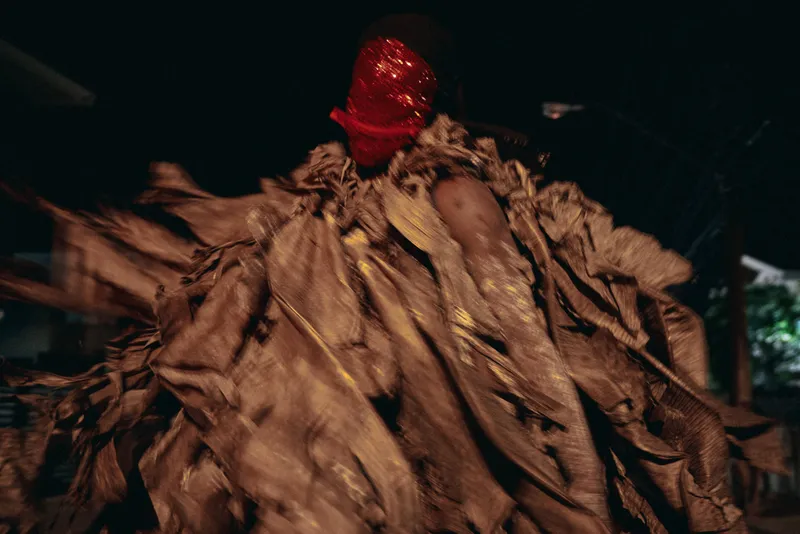
And Carnival is where the entire system inverts. Mas is simultaneously the donning of a mask and the permission to stop pretending. You put on a costume and paradoxically become more yourself. A photograph of someone in mas captures something extraordinarily layered. A video captures the mask in motion, the flickers, the slippages, the instants where one self gives way to another. A photograph catches one state. A film catches the becoming.
Life rarely operates in pairs. Picture a woman sitting between her long-term partner and a friend from her youth. The friend, without knowing it, touches on something unresolved, a wound, a version of this woman that predates the partner’s knowledge of her. The partner senses a shift but cannot name its source. The woman tries to hold space for both and finds the task impossible. No one raises their voice. The evening ends politely. But the emotional field has been permanently perturbed.
The unpredictability of deep human connection is not a sign that something has gone wrong. It is a sign that something real is happening.
The real work is not removing our masks. It is wearing them with consciousness.
Toward a Conscious Practice
The unconscious image-maker documents surfaces. The conscious image-maker understands that every frame and every clip creates a future sealed box. That the frame will hold a ghost. That the footage will hold a voice.
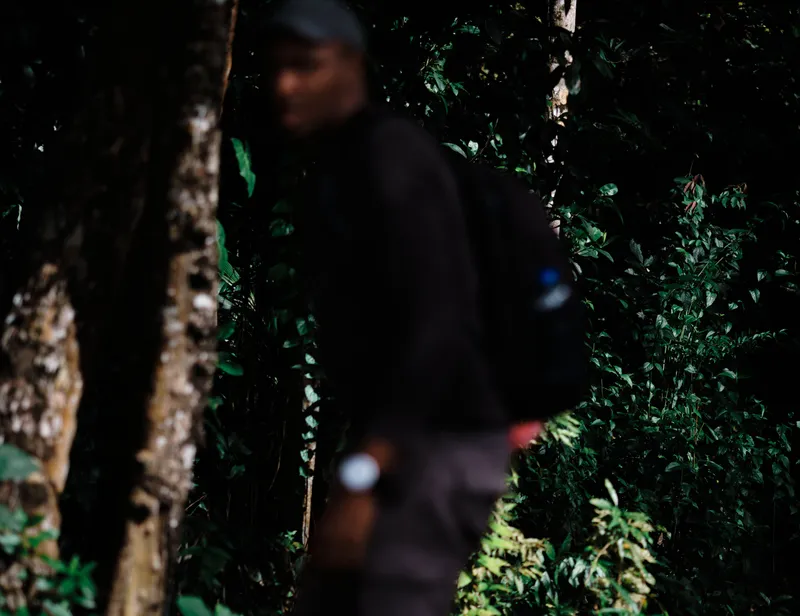
Make images of connections, not moments. Capture the three-body moments, the glance between two people witnessed by a third, the instant someone’s mask slips in the company of people who matter. These cannot be posed. They can only be recognised.
Respect the weight of the archive. The shoebox of prints. The hard drive of files. The camera roll on your phone with a video of your mother’s voice from last Christmas. These are not collections of content. They are collections of ghosts.
The ten frames on a roll of medium format film. The thirty-second video of your friend telling a story at dinner. The two-minute clip of your child’s voice at an age they will never be again.
These are sealed boxes. These are quantum memory devices. And each one will one day be the only remaining trace of a connection that was once whole and warm and alive.
That’s not a flaw. That’s where everything real begins.
Each frame is a sealed box.
Each clip is a sealed room.
The people inside are both alive and not.
Friends and strangers. Present and past.
Open the box. Press play.
Feel the ghost.
That’s the image doing its only real work.